Created by Mike Donghia. Subscribe to our blog for free daily updates.
My grandparent’s generation wasn’t perfect, but they did many things well including a balanced approach to money.
They lived in a time of rapid economic development— in fact, nearly 90% of Americans in their generation had a higher income than their parents at age 30, compared to only half of Americans today. They were the first mass consumer generation, and many of them took advantage of this growing prosperity.
But, what I loved about my grandparents is that they didn’t let money define their lives. Compared to today’s focus on money-making, spending, and investing, they seem downright quaint in their simple values: strong character, supporting your family, serving your community, and faith in God.
If you’ll indulge me in a little generalization, I’d love to share what I think my grandparent’s generation knew about money that we’ve forgotten. It’s a bit of nostalgia for a simpler time, and hopefully a reminder to us all to not lose track of what really matters.
Be very careful about debt
There’s no doubt that American’s have become more comfortable with debt. Household debt has more than doubled in the past two decades with credit card debt reaching an all-time high of over $1 trillion this year. What my grandparents knew, and we seem to have forgotten, is that debt makes you vulnerable. It puts you at the whim and mercy of the one you owe, and it limits your options in life. Even though they could have borrowed more, they didn’t because what they really wanted was financial independence.
Don’t spend all you have
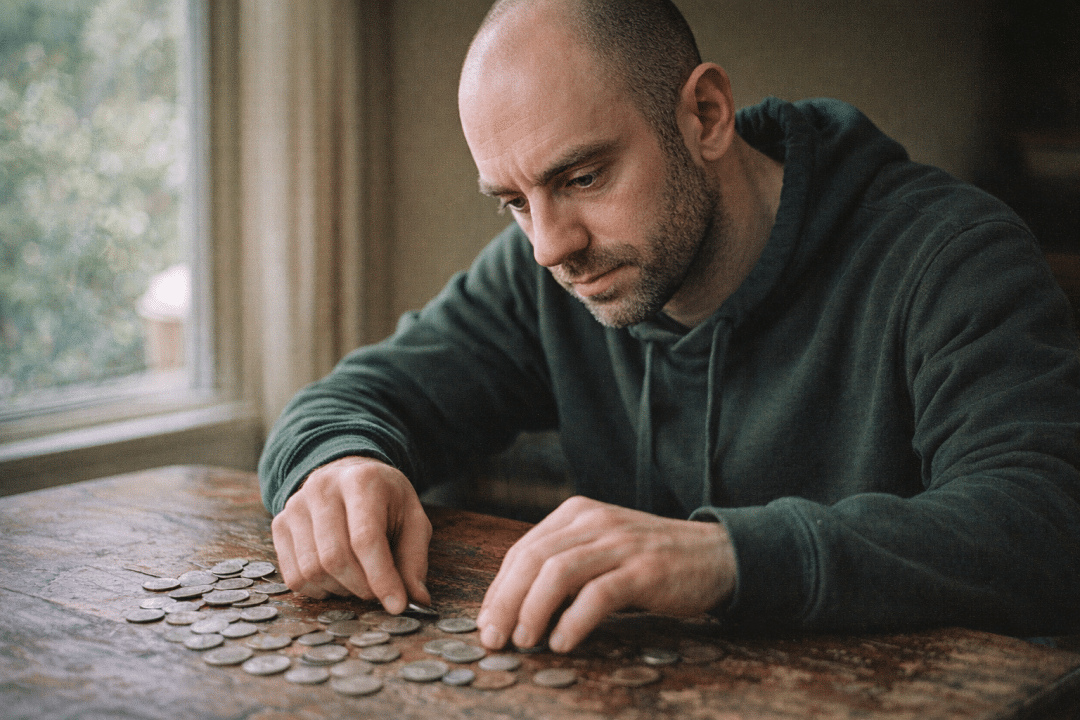
A recent report from the Federal Reserve found that roughly a third of Americans would not have enough money to cover an unexpected $400 expense without selling something or incurring debt. That statistic jumps out to me as a far cry from the values of my grandparents, who consistently lived below their means. Back then, living below your means was a point of pride, whereas we now see it as a sign of not living life to the fullest. I admire the self-control they must have had to set aside their own desires for the well-being of their family’s future.
Money is a tool to support your family
Despite wealth increasing with each generation, we have seen a decreasing emphasis on family. It might be that we have forgotten what my grandparents knew— that no matter how much money you have, your happiness depends a lot more on how well your relationships are doing. Sadly, we seem to be learning this lesson the hard way with loneliness reaching epidemic levels in America. My own advice is to waste no time in repairing what has been broken, and investing generously in those you love.
Love of money is the root of all kinds of evil
Growing up, my grandparents might have been the wealthiest people I knew. But despite this, they never talked about money or put it on a pedestal. To them, money was important, but only in how it allowed them to live a good life. What mattered more was character, community, and faith. If you think about it, we’ve traded that old-fashioned religion for a new one. So many people now worship power, fame, and money, and orient their lives around these pursuits. It’s hard for me to believe that this is progress, when the older gods were far more benevolent.
The simple life is an honorable one
What my grandparent’s generation had was something you don’t see much of anymore: contentment. They weren’t satisfied with everything in the world as it was, but they accepted things and made the best of them. This is a rare trait, because for many of us, contentment sounds like complacency. We don’t want satisfaction, we want to do better, be better, and have more.
And to what end, I ask? With more wealth than ever, we don’t have more time to spend how we please, or better relationships to enjoy. It seems there is some natural limit to these things, and the only way to improve is to change what you care about.
Work hard, and work smart
Our economy definitely rewards knowledge workers and investors more highly than those who work with their hands, but does this mean the old ways are obsolete? I don’t think so. While stocks and real estate have earned returns in the past, there’s no guarantee of future results. The economy could change in ways we can’t predict. But one thing will always be needed: someone who is reliable and gets their job done. You can never go wrong by strengthening your skills and becoming a hard-worker. That’s timeless advice from my grandparent’s generation that still holds up today.
Count your blessings, not your net worth
For my grandparents, money was an important but small slice of the good life pie chart. I remember my grandmother telling me to count my blessings instead of my troubles, a saying that I’ve tried to live by. Surveys suggest we’re now prioritizing money more than ever, with levels of meaningful connection on the decline. I believe this is a choice. It’s a choice to focus your attention on social media instead of face-to-face with real people. It’s a choice to pursue a high-paying career at the expense of time with family. And it’s a choice to count your net worth instead of your blessings.
Make your community richer, not just yourself
Looking back, my grandparents were devout members of their church, but also involved members of their community. They took pride in their small town and tried to make it a better place for all. I admire them for not letting themselves be boiled down to one aspect of their identity. They didn’t define themselves by what they did for a living, or how much money they made— though they worked with excellence. Those values seem to have carried this country a long way, and I’m sad to see the focus become more individualized and self-oriented.
In my own family, I’ve tried to pass on these habits to my children, and I hope I’m doing it justice.
If you enjoyed this article, please support my work by subscribing to my daily newsletter.


