
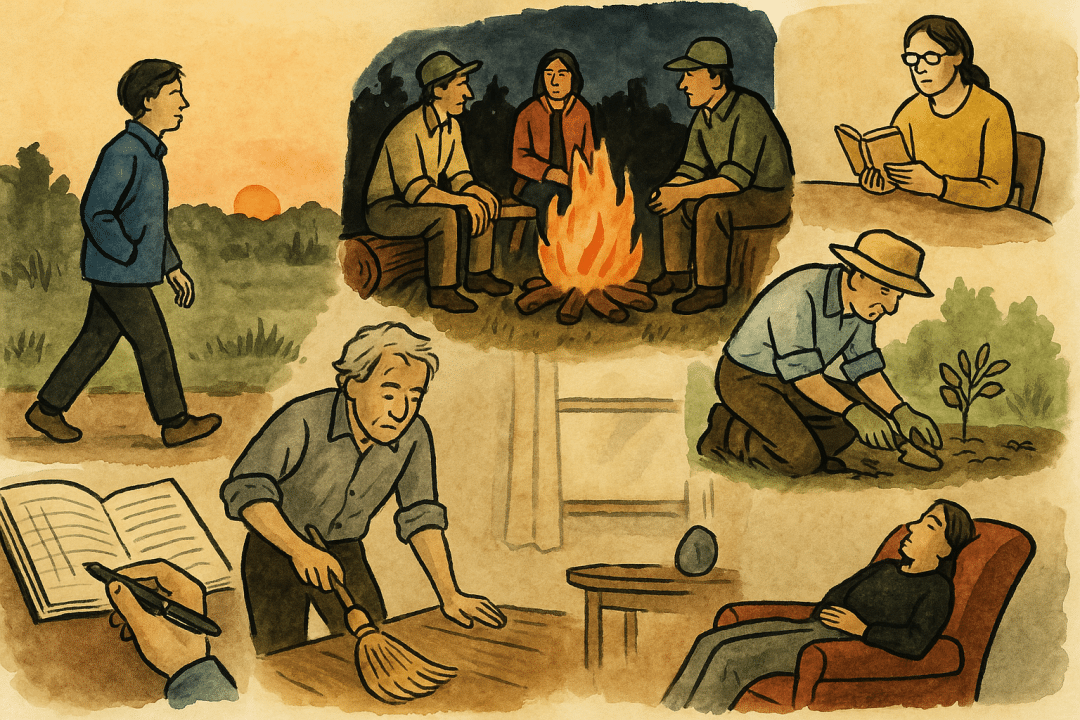
Created by Mike Donghia. Subscribe to our blog for free daily updates.
Only 17 years-old, Booker T. Washington set out from Malden, West Virginia, and walked roughly 500 miles to the Hampton Institute in Virginia. He arrived penniless and unannounced, so the head teacher tested him by handing him a broom: if he could sweep a classroom to spotless perfection, he could stay.
Washington attacked the task as if the future of his life depended on each speck of dust—which, in a sense, it did—and earned both admission and a job as the school’s janitor. During his years at Hampton he rose before dawn to clean, kept a meticulous notebook of every cent he spent, memorized passages from the Bible and classic speeches, and devoted Sundays to quiet study. Those “simple” rhythms—manual work, early rising, careful accounting, intentional rest—became the foundation of the discipline he later preached at Tuskegee and in Up from Slavery.
Washington’s story isn’t a sepia photograph of virtues we can admire only from afar; it’s a blueprint. The strategies that follow—dawn walks, pocket ledgers, device-free suppers, Sabbath stillness—translate his nineteenth-century habits into actionable practices for a twenty-first-century life. Adopt even a few, and you’ll discover what Washington proved with a broom: ordinary acts, repeated daily, can sweep a path to extraordinary growth.
Meet dawn on foot—walk the first mile of every morning before words or screens. Roll out of bed, lace shoes kept beside the door, and step outside before your brain invents excuses. The neighborhood in half-light feels like a private stage, inviting reflection instead of reaction. A simple rule—no podcasts, no replies, only the rhythm of breath—lets sunrise set your first cadence. Record your distance on a calendar if you need accountability; the streak quickly becomes a reason to rise.
Keep a single-page ledger of daily expenses and emotions side-by-side. One column lists dollars spent, the other a quick mood word—calm, restless, grateful—captured at day’s end. Patterns emerge within a week: impulse buys shadowed by frustration, modest days paired with steadier moods. The visual link turns budgeting into self-knowledge rather than self-scolding. Store the page on the fridge and replace it every month to keep the practice lightweight.
Memorize one poem a month to furnish the mind with interior music. Choose something under 20 lines, print it, and tape it above your sink or desk. Read the poem aloud twice daily; by week two, most lines stick, and by week three you can recite it on walks. Poetry lodged in memory becomes portable perspective during traffic jams and hospital waits. Rotate themes—a sonnet in spring, a haiku in winter—to keep the practice fresh.
Fast from dinner to breakfast most days to reset appetite and attention. Finish the evening meal by 7 p.m., then close the kitchen—lights off, door shut—until coffee time. Water or herbal tea bridges any pangs; sleep does the heavy lifting. Within a few mornings, hunger cues sharpen and late-night snacking shrinks to a memory. Track energy and focus in a notebook to verify the experiment’s payoffs for yourself.
Share supper at a common table, no devices, until every plate, cup, and story is emptied. Announce a daily “table time” when phones retreat to a charging station across the room. Conversation starters—high-low of the day, an open-ended question—prime the flow at first. The ritual rewires mealtime from refueling stop to communal checkpoint. Clear dishes together afterward to extend the window of presence.
Finish tasks with hand tools whenever practical to remember the inherent physicality of good work. Use a push mower for a small lawn, a whisk instead of an electric mixer for a single batch, a screwdriver over the drill when urgency is low. The added minutes translate into tactile feedback—wood shavings, arm strain—that reconnects result with muscle. Set one “manual Monday” project each week to keep the habit alive without overwhelming efficiency demands.
Tend a small plot of land—windowsill herbs count—and eat what you coax from seed. Start with hardy greens or basil in a recycled tin, place it where sunlight lingers, and water on a schedule tied to another routine (finish coffee, water plant). Sprouts transform abstract patience into visible progress. The first harvested leaves, sprinkled on eggs, carry a flavor money can’t buy: ownership. Expand only after the initial pot thrives.
End the day by copying a single sentence you admired into a notebook. During daytime reading, mark any line that strikes you; at night, write one of them by hand. The act slows comprehension and seals the phrase into long-term memory. Over months the notebook becomes a curated anthology tailored to your evolving interests. Leaf through it on low-motivation days for a personally tuned jolt of inspiration.
Observe one full Sabbath from work and commerce, letting stillness sharpen desire. Choose a set 24-hour window—Friday sunset to Saturday sunset, or another block—and draft a “not-to-do” list: no email, no shopping, no spreadsheets. Plan meals and chores ahead so excuses evaporate. Boredom may visit; greet it as the gatekeeper to deeper rest. When the period ends, tasks regain clarity because scarcity refines priority.
Revive “out-of-date” traditions—handwritten thank-you notes, bread baked on Fridays—and mine their hidden logic. Pick one custom per month and practice it exactly as ancestors did, resisting modern shortcuts. Physical ink slows gratitude; kneading dough tags Friday with aroma and anticipation. After each experiment, jot what felt cumbersome and what felt grounding. Keep the rituals that enrich, and let the rest remain historical curiosities.
Give away the first 10 % of every paycheck, especially when the math pinches, to remind yourself of the virtue of generosity. Automate the transfer on payday so deliberation doesn’t sabotage intention. Recipients might be a local food bank, a struggling friend, or an arts program you cherish. The immediate dent in budget is offset by a quieter anxiety about money. Gratitude reports or thank-you notes arriving later reinforce the cycle more effectively than any budgeting app.
Trade streaming time for fireside time—gather friends, light a campfire, and let stories replace notifications.Declare one night a week “flame night” and send simple invites: bring a chair and one tale—personal, mythic, or funny. Without structured entertainment, silence nudges people to contribute, and stars take over ambient lighting. Keep phones in a communal basket to prevent glow creep. Embers cooling signal a natural end unlike the auto-play cliffhanger which always wants more.
Beat sunrise and tackle 20 minutes of manual labor—split wood, weed rows, scrub floors—to wake muscle and mind together. Tools staged the night before remove friction; a quiet alarm protects housemates’ sleep. Working while birds, not emails, supply the soundtrack makes exertion feel almost recreational. Sweat earned before breakfast reframes the day’s later tasks as easier. A quick shower seals the transition to desk work.
Log at least an hour of outdoor time daily, rain or shine, to calibrate comfort against real weather instead of indoor settings. Break the hour into commuter walks, lunch-bench reading, or evening strolls if schedules are tight. Proper layers—not heroics—turn drizzle and chill into sensory variety rather than deterrents. Tracking minutes in a calendar app gamifies consistency. Skin and mood alike reveal why older generations called fresh air “the poor man’s medicine.”
If you enjoyed this article, please support my work by subscribing to my daily newsletter.