
Created by Mike Donghia. Subscribe to our blog for free daily updates.
As the grandchild of a rural dairy farmer, I have a pretty strong sense of what life before screens must have felt like. My grandparents, having grown up without TVs and smartphones, cultivated a way of living that didn’t require them. And even when they did finally purchase a small TV, I can promise you it didn’t have a central role in their home like the ones we have today.
It’s hard to comprehend for those of us who were raised on TV shows, Youtube, and Instagram. What did people do in their homes without the blue glow of a screen to entertain them?
We almost can’t imagine a life without screens, assuming it must have been thick with boredom. But it only feels that way because we’re comparing it to a life filled with effortless, passive entertainment. What has been lost, and the reason it’s worth reflecting on this, is that life without screens is far more immersive and rewarding. It’s a lifestyle I try to emulate from a distance in my own family.
Here are a few highlights from the world our parents and grandparents knew, back in a time when entertainment was something you did, not something you watched.
They sat on their porches and chatted with neighbors
Growing up in the suburbs was a different experience than what many of us have today. I was born in 1985, but it seems like it wasn’t until the turn of the century that air conditioning became a ubiquitous standard in all homes. Before then, people spent more time outside, including evenings on the porch, to escape the heat. This created a natural space for bumping into neighbors and striking up spontaneous conversations.
They wrote letters to pen pals who lived far away
My siblings and I were all homeschooled through high school, and part of our curriculum was writing letters to pen pals instead of emails. I have a box full of handwritten letters that I exchanged with my friends, and it still feels special to look back on them from time to time. I’m glad I caught the tail end of the era when people took the time to write their correspondence on physical paper.
They made their own music with instruments and singing
I’ve heard stories about my grandparents who, along with their siblings and cousins, would get together and play various instruments for fun. Today, if you ask ten people if they play an instrument, you probably won’t find a single one. There’s still music in our homes, but it’s mostly streamed from our devices while we do other things. I think it’s a big loss for the spontaneous creation of live music to have completely disappeared.
They went out for walks and visited local parks
I do believe that exercise has become more popular than ever, with more people today making it a part of their lives than people did 80 years ago. But I’m not sure that means we’re more active. Before the convenience of cars and air conditioning, a lot more of life happened outside. You had to walk more to get to where you were going, and people would stroll more often since there was less in-home entertainment. My sense is that these incidental activities took place far more often than the relatively small percentage of us who now go to the gym.
They gathered with friends and relatives for games
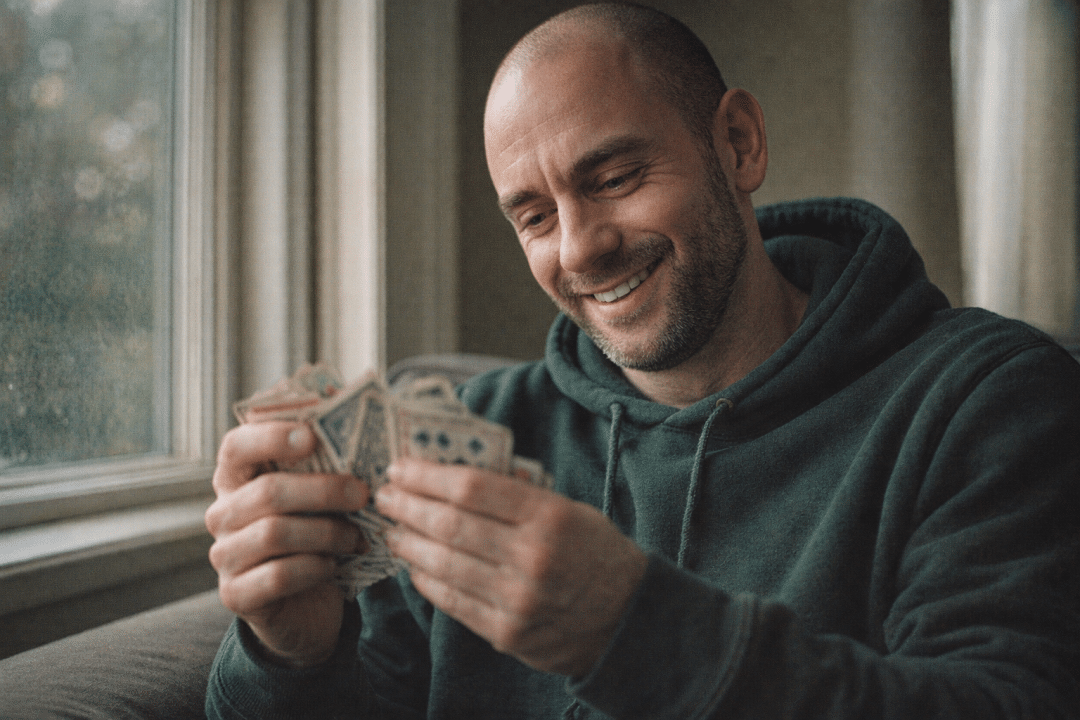
Board games and card games have been around for generations, but I think they used to be played a lot more regularly than they are now. My grandmother passed along her love of card games to my father, and then to me. Playing games is one of my favorite pastimes. It’s a social activity that allows people to interact around a shared activity, with plenty of room for conversation, laughter, and getting to know one another.
They cooked complicated meals and hosted guests
Cooking for yourself may not seem like entertainment, but that’s only if you assume entertainment must be effortless. I think many of today’s popular hobbies would adapt well to the pre-screen era: cooking, baking, breadmaking, and brewing beer. Because these activities encourage craftsmanship and the potential for growth, they form a category of entertainment that is deeper than anything we’ll find on a screen.
They went to cafes or diners to hang out with friends
Another fond memory I have with my family is going to diners in the evening with my uncle and grandmother. We would order desserts and spend hours talking and laughing over our food. The food was great, but the real reason we went was that it was a fun thing to do. It beat sitting at home watching TV, and the activity gave us a common bond to build our relationship around.
They participated in hobby clubs and social organizations
America has long had a reputation as a country of joiners. Historically, we’ve been more eager to join clubs and member organizations than most other developed countries. I think this speaks to a desire for community and shared interests with others. Many of those who lived during the pre-screen era grew up in a context where these activities were the most interesting thing to do. Even after the TV became more common, it never really satisfied the deeper urges of human nature to know and be known by others.
They got really good at a craft or sport and played it regularly
There are many people today who have their own hobbies, but I think it’s safe to say that we spend a higher percentage of our leisure time consuming rather than creating. The convenience and pleasure of all that our screens have to offer didn’t eliminate people’s appetite for creative pursuits— it merely brought them under a category we now call hobbies. It used to be that the average person was more likely to be involved in some sort of hobby, because, compared with TV, that was even more engaging.
Conclusion: Today, we live at a time when it’s possible to have nearly everything you want immediately. But as wonderful as this sounds, it isn’t perfect. Most of life’s greatest pleasures, such as love, achievement, recognition, and friendship, require time to develop. They are a reward for our investment. In a world without screens, people found ways to entertain while doing things that could satisfy them at a deeper level. Their entertainment didn’t pacify them with a low-level pleasure as ours does, but enabled them to pursue greater things—relationships, clubs, crafts, and parenting. We can certainly take a step towards that better way of living by making space in our own homes for these old-fashioned ways of having fun. Wouldn’t it be more satisfying to look back on our lives and realize that we weren’t just entertained, we had really lived?
If you enjoyed this article, please support my work by subscribing to my daily newsletter.


