
Created by Mike Donghia. Subscribe to our blog for free daily updates.
I’m going to say something mildly controversial: our grandparents were better at life than we are.
Not smarter. Not more enlightened. Just better at the boring, practical stuff that actually matters—feeding a family, managing money, fixing problems, and not panicking every time something breaks or costs more than expected.
They didn’t call it “frugal living.” They called it being normal.
Somewhere along the way, we traded competence for convenience and then wondered why everything feels expensive, fragile, and exhausting. As prices creep up and spending gets frictionless, I keep finding myself pulled back to the old ways. Not out of nostalgia, but because they still work.
Here are ten old-fashioned habits worth bringing back in 2026, whether modern culture likes it or not.
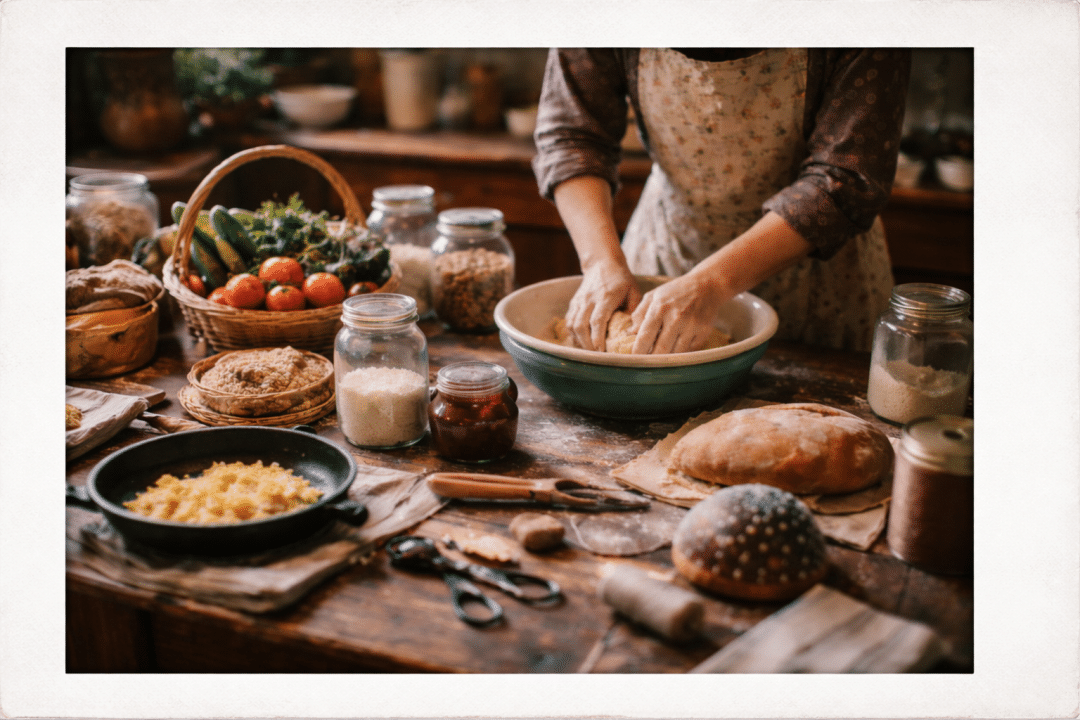
1. Cooking from scratch instead of outsourcing every meal
We’ve been sold the idea that cooking is a burden and convenience food is the solution. That’s backwards. Previous generations cooked because that’s how food worked, and once you stop relying on boxes, bags, and apps, you realize how cheap—and empowering—real food actually is. A handful of staples can stretch into dozens of meals. You gain health, skill, and confidence all at once. The real luxury isn’t takeout; it’s knowing you can feed yourself without paying a premium for it.
2. Fixing things instead of instantly replacing them
We live in a culture that treats mild inconvenience like an emergency. Something tears, cracks, or stops working and the reflex is to toss it. Older generations would have laughed at that. They fixed things because replacing everything all the time was unthinkable. You don’t need to be especially handy. You just need to stop assuming broken means useless. A needle, glue, screwdriver, or quick tutorial can quietly save hundreds over time.
3. Growing at least some of your own food
You don’t need a homestead. You need one plant. Herbs, tomatoes, greens—anything. The point isn’t self-sufficiency; it’s reconnection. When you grow even a little food, you waste less, cook more intentionally, and stop treating groceries like magical objects that appear on shelves. It’s humbling, grounding, and surprisingly practical.
4. Treating leftovers like assets, not annoyances
Wasting food used to be unthinkable. Now it’s routine. Leftovers weren’t something to tolerate; they were tomorrow’s lunch or tomorrow’s dinner shortcut. Once you adopt that mindset, your grocery bill drops fast. Food waste isn’t just bad for the budget—it’s usually a sign of lazy systems. Plan for leftovers and meals suddenly get cheaper and easier at the same time.
5. Living within your means without negotiating with yourself
This one makes people uncomfortable, which is how you know it matters. Older generations didn’t “make it work” with financing, payment plans, or mental gymnastics. If they didn’t have the money, they didn’t buy the thing. Full stop. That restraint didn’t make them miserable; it made them free. When spending has limits, peace increases. When everything is affordable eventually, anxiety never leaves.
6. Wearing hand-me-downs and buying secondhand without apology
Somehow we decided that used equals inferior. It doesn’t. Hand-me-downs built families. Thrifted furniture outlasted flimsy new stuff. Secondhand books came with stories already inside them. Buying used isn’t a failure of success; it’s evidence of discernment. And once you stop caring about everything being new, shopping loses its grip on you.
7. Finding entertainment that doesn’t require a credit card
Subscription culture has trained us to pay for fun. Older generations didn’t outsource joy. They walked, talked, played games, read library books, and gathered with friends. Relationships were stronger for it. Free entertainment isn’t second-rate; it’s often the most meaningful kind, and it doesn’t disappear when money gets tight.
8. Cooking in bulk like your time actually matters
Cooking one portion at a time is wildly inefficient, yet it’s become normal. Batch cooking was common sense: fewer ingredients, less energy, fewer trips to the store. It’s still one of the smartest ways to protect your budget and your evenings. A freezer full of homemade meals is a form of stability we don’t talk about enough.
9. Making spending visible instead of frictionless
Swiping is too easy. That’s the problem. When money becomes invisible, overspending feels harmless. Older systems—cash, envelopes, strict categories—worked because they forced awareness. You felt the tradeoffs. Any method that slows spending down and makes it visible is worth revisiting, no matter how old-school it feels.
10. Saving scraps instead of assuming trash is the end of the story
“Waste not, want not” wasn’t a slogan; it was a rule. Scraps became broth. Old clothes became rags. Jars became storage. Nothing was dismissed without a second look. That mindset compounds quietly into real savings over time. Throwaway culture is expensive. Resourcefulness is not.
Old-fashioned frugality isn’t about being cheap. It’s about being capable. In a world built on convenience and consumption, choosing competence is quietly radical. These habits don’t help you live smaller—they help you live sturdier.
If you enjoyed this article, please support my work by subscribing to my daily newsletter.


